 Mixer AI




Como gerar vídeo a partir de uma cena 3D
A câmera, os cortes e a posição dos personagens de um vídeo com IA podem ser definidos por uma cena 3D bruta. As pessoas são cápsulas coloridas e as casas, caixas cinza; a cena é renderizada em mp4 e anexada ao Seedance 2.5 junto com os cartões dos personagens e do lugar.
Mais
Do clipe o modelo pega o movimento de câmera, o corte e quem está onde. Rostos, roupas, lugar e luz vêm dos cartões e do texto. A cena é montada no navegador com three.js, sem Blender.
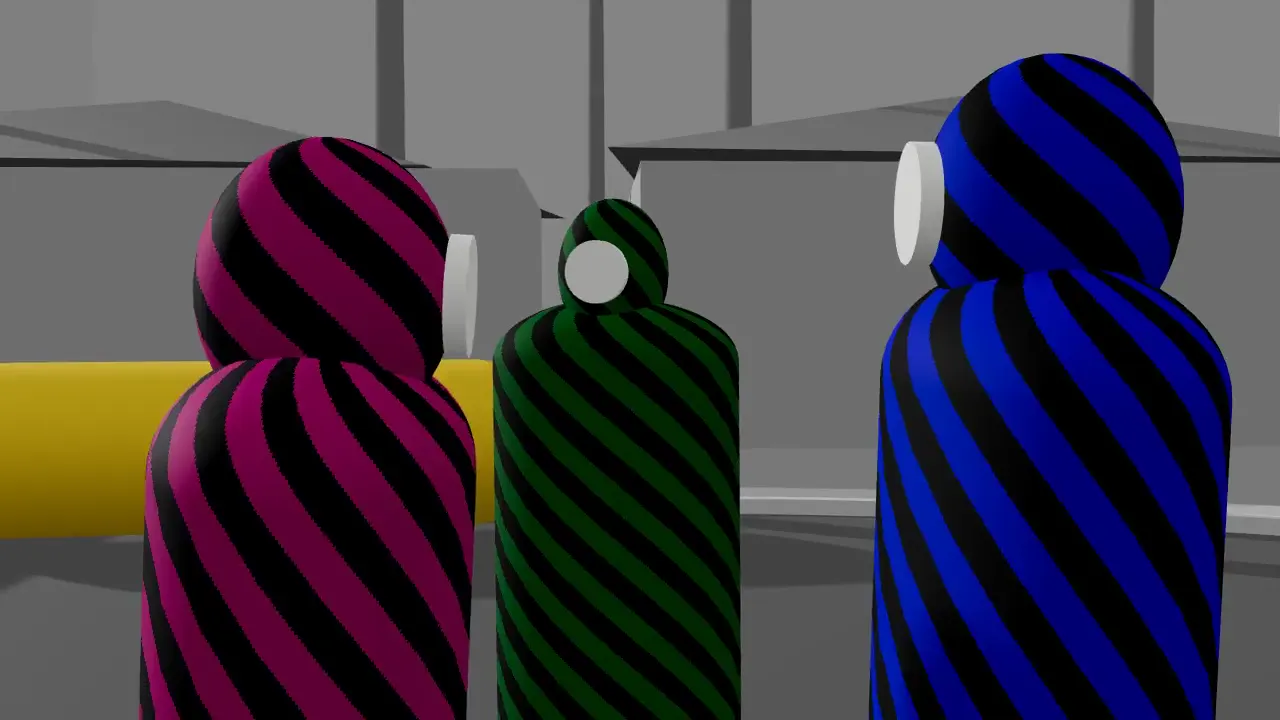
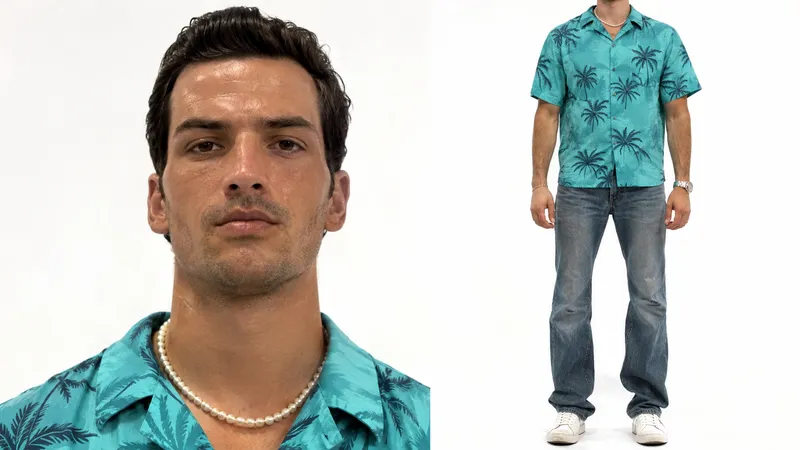
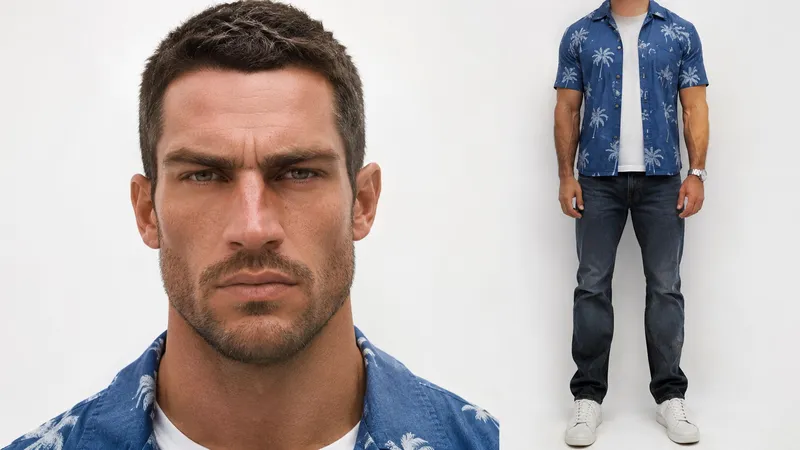
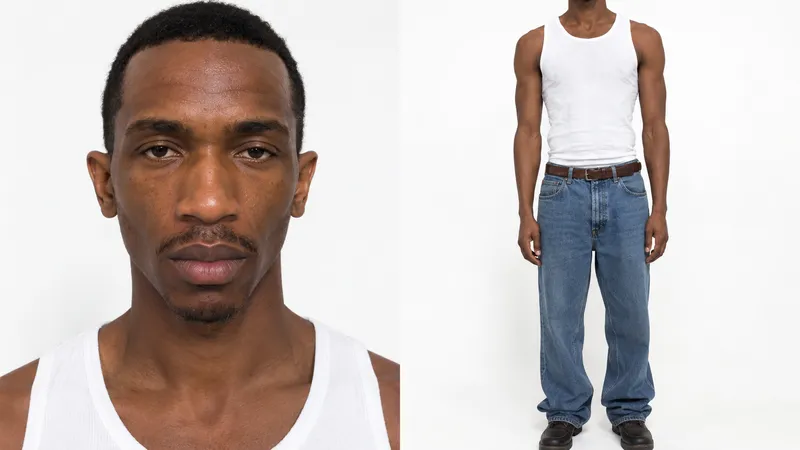
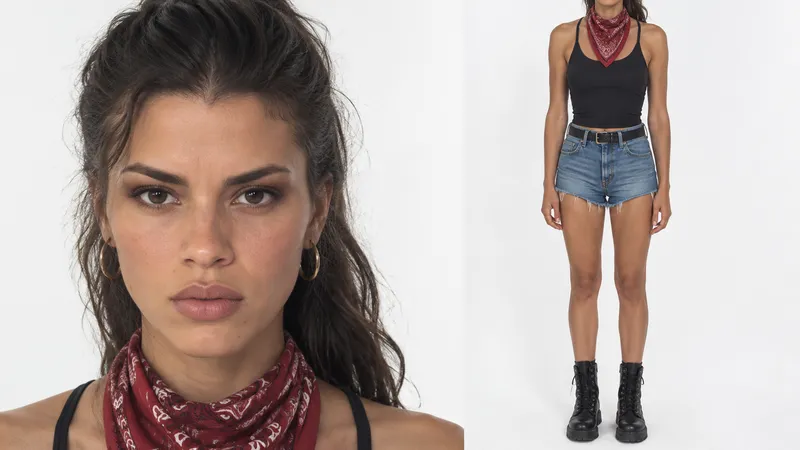
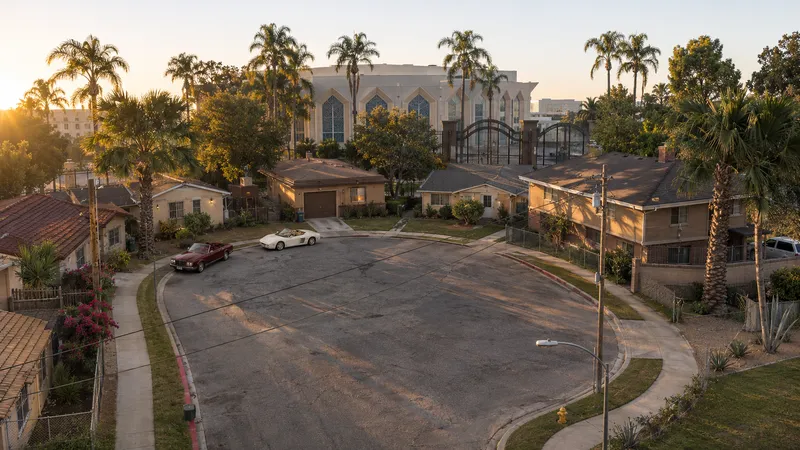
Prompt da briga
@video1 is a coarse blockout of the scene made of capsules. From @video1 take only the camera movement, the moment of the cut, where each character stands and where they go, and the timing of every movement. The grey colour, capsules, boxes and materials in @video1 are placeholders, not a style: people, cars, location and light come from the cards and the text.
Who is who in @video1: the pink-and-black capsule is Hero 1 @image1; blue-and-black is Hero 2 @image2; green-and-black is Hero 3 @image3; red-and-black is Heroine 4 @image4. The white dot on a capsule marks the side of the face, where the character looks. The yellow lying capsules are the cars from @image5: the left one, at the left kerb, is the burgundy convertible @image5; the far one, at the kerb at the back of the cul-de-sac, is the white convertible @image5. Grey boxes are the houses @image5, grey poles are the utility poles @image5, the light ring is the kerb of the circle @image5.
The capsules from @video1 never appear in the frame: live people and cars from the cards stand in their place.
Video 16:9, exactly 2 shots with one hard cut at second 2, 5 seconds.
MAIN POINT is appearance: Hero 1 @image1, Hero 2 @image2, Hero 3 @image3 and Heroine 4 @image4 match their cards in every frame: face shape, eyes, nose, lips, hair, clothes.
@image1 is Hero 1: face, hair and clothes from the card; the card shows one person (his face on the left, his full figure on the right); do not take the white background or the card layout.
@image2 is Hero 2: face, hair and clothes from the card; the card shows one person (his face on the left, his full figure on the right); do not take the white background or the card layout.
@image3 is Hero 3: face, hair and clothes from the card; the card shows one person (his face on the left, his full figure on the right); do not take the white background or the card layout.
@image4 is Heroine 4: face, hair and clothes from the card; the card shows one person (her face on the left, her full figure on the right); do not take the white background or the card layout.
@image5 is the location: a cul-de-sac circle in a Californian suburb; take the asphalt of the circle, kerbs, houses, palms, the large white building with arched windows and both cars in their places; time of day and light as written below.
Layout of the location: the camera stands on the south side of the circle @image5 and looks north, into the cul-de-sac. The characters stand in the middle of the asphalt circle @image5. At the left kerb of the circle is the burgundy convertible @image5, at the far kerb in front of a garage is the white convertible @image5, behind them single-storey houses, palms and the white building with arched windows @image5. Early morning, the sun has just risen.
Shot 1, 0–2.0 s, close-up: faces, heads and shoulders. The camera at eye level, 1.3 metres from the pair, is already slowly moving right along a short arc around them; the distance does not change, no zoom and no push-in. Hero 1 @image1 in the left half of the frame and Hero 2 @image2 in the right half stand head to head, foreheads almost touching, in profile to the camera: Hero 1 @image1 looks right at Hero 2 @image2, Hero 2 @image2 looks left at Hero 1 @image1. Between their heads, a metre behind them and slightly out of focus, Hero 3 @image3 faces the camera. Behind them, blurred in the depth, are the white convertible @image5 and the yard with houses @image5. All three sway slightly, nobody stands like a post. At 0 s Hero 1 @image1 is already leaning his chest into Hero 2 @image2 and bumps him twice with his body, Hero 3 @image3 has turned his head to Hero 1 @image1. From 0.9 s Hero 2 @image2 interrupts Hero 1 @image1, leans closer and looms over him, Hero 1 @image1 leans back a little; Hero 3 @image3 shifts his eyes to Hero 2 @image2 and from 1.5 s leans towards them. From 1.9 s Hero 3 @image3 steps towards them and interrupts Hero 2 @image2.
Hard cut at 2.0 s.
Shot 2, 2.0–5.0 s, wide shot of the group. The camera is in front and higher, about second-floor height, some nine metres from the characters, looking down at them; Hero 1 @image1, Hero 2 @image2 and Hero 3 @image3 are in frame head to toe, behind them the asphalt, the kerb and the white convertible @image5 at the far kerb, the burgundy convertible @image5 further left. The camera is already floating right along an arc at a constant speed and rises slightly; the shot size does not change, no zoom and no push-in. 2.0–2.8 s: Hero 3 @image3 stands right up against Hero 1 @image1 and Hero 2 @image2, bumps his chest into one, then the other, and turns his head to each. Right after the cut Heroine 4 @image4 runs into the frame from the lower left: she is already running across the asphalt diagonally towards them, her arms and legs slightly motion-blurred. By 3.3 s Heroine 4 @image4 stops between Hero 1 @image1 and Hero 2 @image2, back to the camera, throws her straight arms out to the sides and presses her palms into their chests: left palm into the chest of Hero 1 @image1, right palm into the chest of Hero 2 @image2. From 3.2 to 4.2 s Hero 1 @image1 steps back to the left and Hero 2 @image2 to the right, the gap between them as wide as her outstretched arms. From 3.4 to 4.0 s Hero 3 @image3 steps back and to the right, visible behind them.
4.0–5.0 s, a soft ending for editing. The camera keeps floating right. Hero 1 @image1 and Hero 2 @image2 turn to Heroine 4 @image4; Hero 1 @image1 jerks a shoulder and straightens his collar, Hero 2 @image2 leans back and smirks. Heroine 4 @image4 keeps her arms out and looks from one to the other. Hero 3 @image3 stands behind them. Everyone sways slightly. No new events.
Lines, in English, loud, everyone interrupts each other; each speaks only their own line, lips in sync syllable by syllable, closed before and after it:
0.0–1.2 s — Hero 1 @image1: "This street's mine, pal."
0.9–2.1 s — Hero 2 @image2 interrupts Hero 1 @image1: "Yours? That was years ago, old man."
1.9–3.0 s — Hero 3 @image3 interrupts Hero 2 @image2: "Y'all trippin'. This MY hood!"
2.4–3.4 s — Heroine 4 @image4, running, interrupts Hero 3 @image3: "Chill! We all work together, fools!"
After 3.4 s nobody speaks.
Light: low morning sun right after sunrise, warm golden side light on faces and clothes, long soft shadows of palms and people across the asphalt, clear pale-blue sky, bluish skylight in the shadows.
Camera: handheld in the close-up, no stabilisation, the frame breathes and sways; a smooth arc move in the wide shot. Everyone is alive: they breathe, blink, hair and fabric move.
Sound: the lines, footsteps, the fast run of Heroine 4 @image4 on asphalt, rustle of clothes, distant noise of the morning city. No music. No subtitles or titles.
Manner: Hero 1 @image1 is cocky, chin up; Hero 2 @image2 is heavy and pushes with his shoulders; Hero 3 @image3 gets worked up and turns his head to whoever is speaking; Heroine 4 @image4 is quick and sharp.
Real footage: SDR, main smartphone camera, live people, a real location and light, super-smooth natural skin texture, cracked asphalt, cotton clothes, soft muted colours. No HDR effect, no artifacts, no plastic skin.
Passo a passo
Faça os cartões.
Para cada personagem, uma pessoa em fundo branco: à esquerda o rosto em close, à direita o corpo inteiro com a roupa da cena. Para o lugar, uma imagem sem pessoas.
Monte a cena de pílulas em three.js.
As pessoas são cápsulas da sua cor com um ponto branco do lado do rosto; casas e carros, caixas cinza e cápsulas deitadas. A câmera se move em cada plano e o corte cai no segundo certo.
Abra o Seedance 2.5 no modo Editor de vídeo.
Envie o previz como vídeo de origem e os cartões como fotos. O formato e a duração do resultado vêm do previz.
Escreva o prompt.
Chame o vídeo de esboço bruto (coarse blockout), dê a legenda de cores, marque o personagem a cada menção e descreva as ações por segundo.
Ative Rascunho e o clipe chega em 480p.
Se gostar, toque em Finalizar rascunho em até 7 dias: o mesmo vídeo em 1080p sem nova geração.
Exemplo: briga de quatro personagens
5 segundos, dois planos. Até o segundo 2, close: dois discutem cara a cara e um terceiro atrás. Depois do corte, plano geral do alto: a quarta chega correndo e separa os dois. Modo Editor de vídeo, o previz como vídeo de origem e cinco cartões como fotos. Saiu na primeira tentativa.
Como a cena de pílulas é montada
- A cena é uma página HTML com three.js. Ela abre no navegador e é renderizada quadro a quadro em mp4, a 24 quadros por segundo.
- Uma pessoa é uma cápsula em forma de pílula da altura do personagem, sem braços nem pernas. Listras de duas cores: a do personagem e quase preto. Um ponto branco na altura dos olhos mostra para onde ele olha. Cada personagem tem sua cor.
- Casas e postes são caixas e cilindros cinza, carros são cápsulas deitadas, o chão é cinza-claro. Sem texturas nem logotipos.
- Nada de linhas de trajeto, eixos, grades, legendas ou ícones de câmera no quadro: eles vazam para o resultado.
- A câmera é definida no tempo: onde está, para onde olha, qual lente. Um corte é uma troca instantânea de posição no segundo certo.
- A pílula percorre o caminho do personagem e vira o ponto branco para onde ele olha. Um salto ou um mortal é a cápsula subindo e girando.
O que escrever no prompt
- Na primeira linha, chame o vídeo de esboço bruto (coarse blockout) e liste o que tirar dele: o movimento de câmera, o momento do corte, onde cada personagem está e para onde vai, o tempo de cada movimento.
- Diga claramente que o cinza, as cápsulas e as caixas do vídeo são marcadores. Pessoas, lugar e luz vêm dos cartões e do texto.
- Legenda de cores: qual cápsula é qual personagem com qual @image. Sem ela o modelo confunde personagens e perde um.
- Marque o personagem a cada menção: «Herói 2 @image2 se inclina», nunca «ele» ou «ela».
- Se anexou um cartão, não descreva a aparência em palavras: o texto briga com a imagem. Basta a marcação e a ação.
- Ações por segundo, iguais às do previz, e o corte no mesmo segundo.
- Descreva mãos, dedos e expressões no texto: a cápsula não os tem.
- Os últimos 0,5–1 s sem eventos novos: fica mais fácil de editar.
Cartões dos personagens e do lugar
- Cartão de personagem: uma pessoa em fundo branco, o rosto em close à esquerda e o corpo inteiro com a roupa da cena à direita. Um para cada pessoa visível.
- Cartão de lugar: uma imagem do local sem pessoas. O ângulo de câmera do texto não deve contradizer o cartão.
- Anexe só o que aparece no quadro. Os números @imageN seguem a ordem de envio.
Rascunho 480p e finalização em 1080p
- Ative Rascunho: o clipe chega em 480p, com a mesma duração do previz.
- Confira a câmera e o corte, se todos os personagens estão no lugar, se os rostos batem com os cartões e se vazaram texturas cinza.
- Se gostar, toque em Finalizar rascunho em até 7 dias. É o mesmo vídeo em 1080p, sem nova geração.
- Se não, faça um rascunho novo com o prompt ou o previz corrigidos. Mude uma coisa por vez.
Precisa de uma cena 3D detalhada: mãos, dedos, rig?
Testamos com um mortal para trás. Câmera e ritmo são iguais nas duas cenas: uma órbita baixa de 360° em 4 segundos. Em uma há um manequim detalhado com animação de mortal; na outra, uma pílula que gira. Os anexos também são iguais: o cartão do personagem e o do beco, modo Editor de vídeo. Os prompts só mudam nas linhas sobre quem está no previz.
- Câmera, ritmo e lugar saíram iguais: a órbita, a decolagem perto do segundo 1, de cabeça para baixo aos 1,5 s, o viaduto, as casas e os carros no lugar.
- A versão do manequim repetiu o movimento dele: no início o personagem fica de pé com os braços retos pendurados e, depois de aterrissar, se curva com as pernas quase retas e os braços pendurados.
- A versão da pílula pegou o movimento do texto: impulso dos braços antes do salto, agachamento fundo na aterrissagem, a palma perto do asfalto. O impulso começou um pouco antes do que diz o prompt.
- Conclusão: o manequim detalhado não trouxe ganho. O modelo copia o movimento duro dele e palavras não corrigem isso. A pílula basta, e o movimento dos braços é descrito no texto.
Onde o método falha
- Muitos personagens. O modelo pode perder um: em uma das nossas cenas o previz tinha quatro pessoas e o vídeo, três. Ajudam a legenda de cores, a marcação a cada menção e um previz em que ninguém cobre ninguém.
- Colocar pessoas sentadas, por exemplo num carro, sai mal.
- Às vezes vazam texturas 3D do vídeo cinza: paredes cinza, listras na roupa.
- Se a câmera fica parada num plano, o plano congela. A câmera deve se mover em cada plano, nem que seja devagar.
- Uma cena dividida em muitas gerações separadas perde a unidade do cenário. Uma geração para todos os planos mantém melhor o mundo.
- Depois de duas falhas seguidas, passe para o modo A partir de referências sem vídeo: cartões e um texto detalhado por segundo.
Skill para o agente: previz completo
O método está empacotado numa skill: um arquivo de instruções para um agente de IA. Com ela o agente monta a cena de pílulas, renderiza em mp4, confere a folha de quadros, escreve o prompt com a legenda de cores e roda o rascunho via MCP; depois do seu sim, finaliza em 1080p. Antes de cada geração paga o agente diz o preço e espera o seu consentimento.
Claude Code: descompacte o arquivo em ~/.claude/skills/ e aparece a pasta previz-pills-seedance com o SKILL.md e o script de render. Outros agentes: coloque a pasta onde o agente guarda as skills ou anexe o SKILL.md ao chat e escreva «trabalhe por este arquivo». O arquivo está em russo, mas o agente o segue em qualquer idioma. Para o render são necessários Python, Playwright e ffmpeg; os comandos de instalação estão na skill.
Com qual modelo fazer

Perguntas frequentes
Preciso do Blender?
Não. A cena de cápsulas e caixas é montada com three.js numa página HTML comum, que abre no navegador.
Por que as pessoas são cápsulas sem braços nem pernas?
A cápsula define a posição, a altura e a direção do olhar; a pose o modelo tira do texto. Membros no previz são copiados com a animação dura deles, e o texto não corrige isso.
Quanto deve durar o previz?
De 4 a 30 segundos: os limites do modo Editor de vídeo. A duração e o formato do resultado vêm do previz.
O modelo vai copiar as cápsulas e paredes cinza?
Às vezes vazam texturas cinza. Ajudam uma linha no prompt dizendo que o vídeo cinza é um marcador e um previz limpo, sem detalhes demais.
Dá para fazer sem vídeo?
Sim, no modo A partir de referências: cartões e um texto detalhado por segundo. Se duas tentativas seguidas com previz falharam, tente assim.