 Mixer AI




How to generate video from a 3D scene
You can set the camera, cuts and character blocking of an AI video with a rough 3D scene. People in it are coloured capsules and houses are grey boxes; the scene is rendered to mp4 and attached to Seedance 2.5 together with character and location cards.
More
From the clip the model takes the camera move, the cut and who stands where. Faces, clothes, location and light come from the cards and the text. The scene is built right in the browser with three.js, no Blender needed.
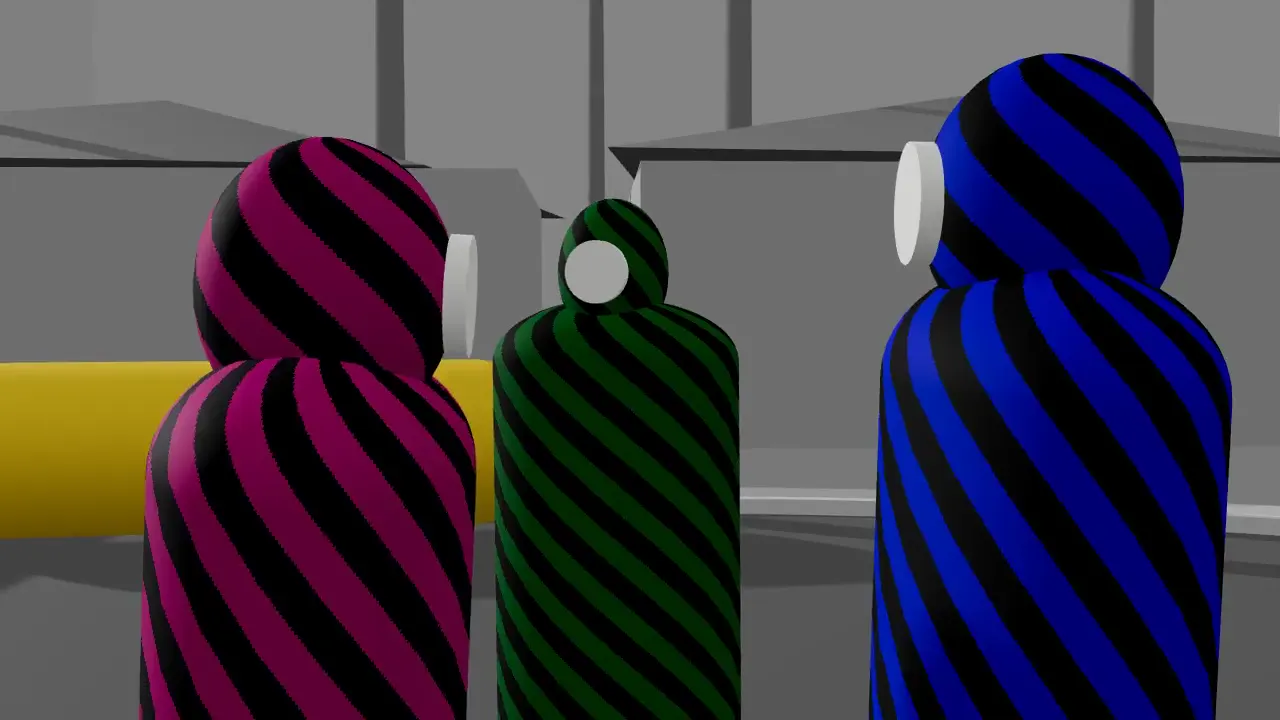
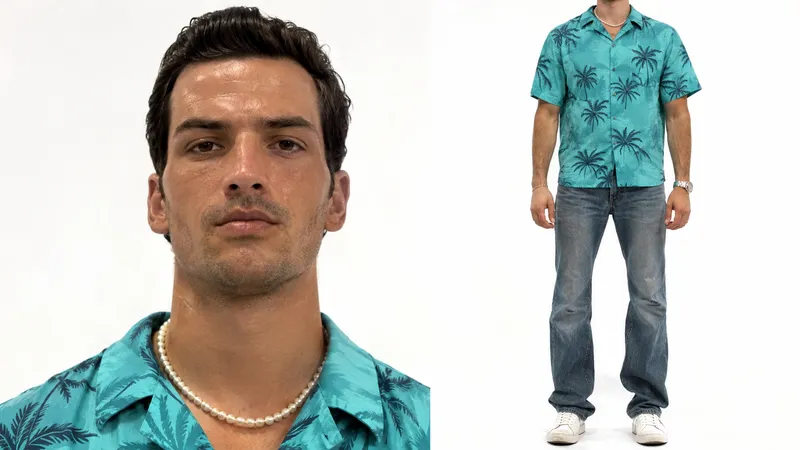
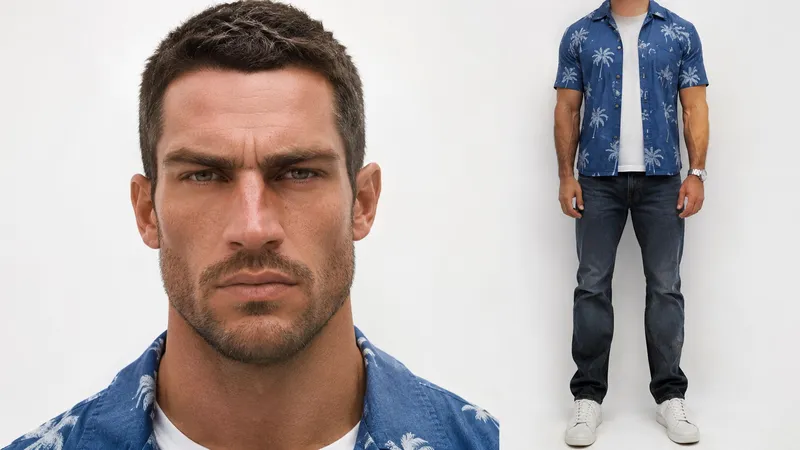
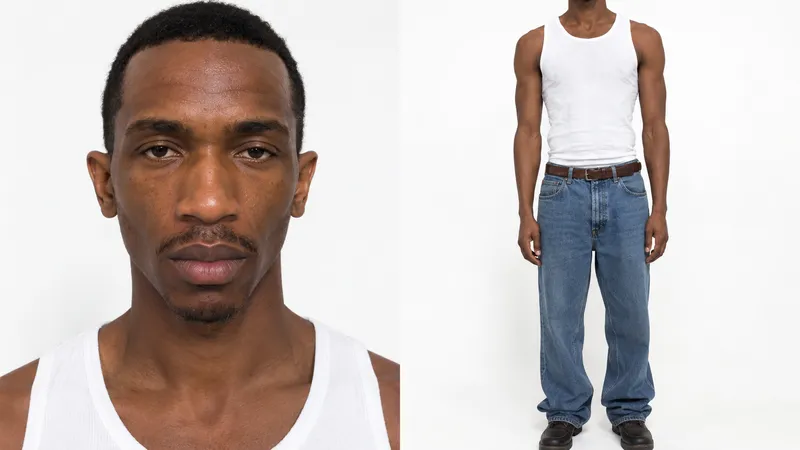
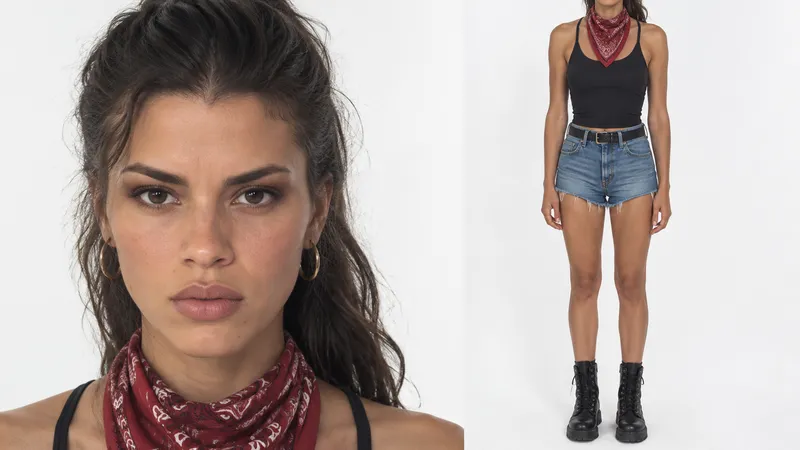
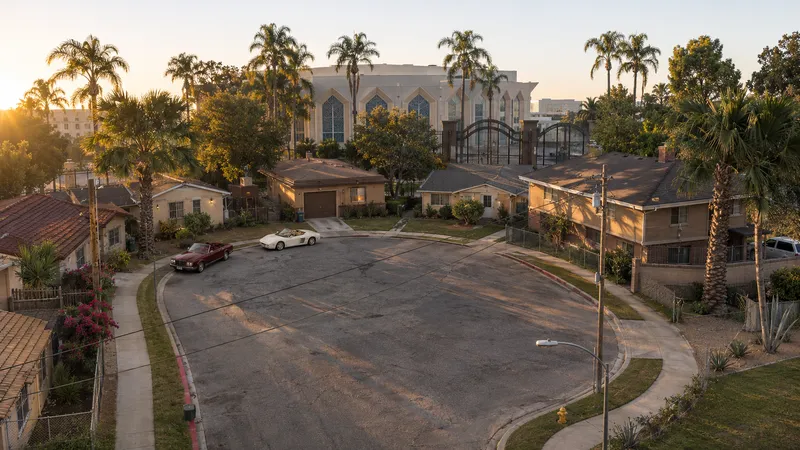
Prompt for the standoff
@video1 is a coarse blockout of the scene made of capsules. From @video1 take only the camera movement, the moment of the cut, where each character stands and where they go, and the timing of every movement. The grey colour, capsules, boxes and materials in @video1 are placeholders, not a style: people, cars, location and light come from the cards and the text.
Who is who in @video1: the pink-and-black capsule is Hero 1 @image1; blue-and-black is Hero 2 @image2; green-and-black is Hero 3 @image3; red-and-black is Heroine 4 @image4. The white dot on a capsule marks the side of the face, where the character looks. The yellow lying capsules are the cars from @image5: the left one, at the left kerb, is the burgundy convertible @image5; the far one, at the kerb at the back of the cul-de-sac, is the white convertible @image5. Grey boxes are the houses @image5, grey poles are the utility poles @image5, the light ring is the kerb of the circle @image5.
The capsules from @video1 never appear in the frame: live people and cars from the cards stand in their place.
Video 16:9, exactly 2 shots with one hard cut at second 2, 5 seconds.
MAIN POINT is appearance: Hero 1 @image1, Hero 2 @image2, Hero 3 @image3 and Heroine 4 @image4 match their cards in every frame: face shape, eyes, nose, lips, hair, clothes.
@image1 is Hero 1: face, hair and clothes from the card; the card shows one person (his face on the left, his full figure on the right); do not take the white background or the card layout.
@image2 is Hero 2: face, hair and clothes from the card; the card shows one person (his face on the left, his full figure on the right); do not take the white background or the card layout.
@image3 is Hero 3: face, hair and clothes from the card; the card shows one person (his face on the left, his full figure on the right); do not take the white background or the card layout.
@image4 is Heroine 4: face, hair and clothes from the card; the card shows one person (her face on the left, her full figure on the right); do not take the white background or the card layout.
@image5 is the location: a cul-de-sac circle in a Californian suburb; take the asphalt of the circle, kerbs, houses, palms, the large white building with arched windows and both cars in their places; time of day and light as written below.
Layout of the location: the camera stands on the south side of the circle @image5 and looks north, into the cul-de-sac. The characters stand in the middle of the asphalt circle @image5. At the left kerb of the circle is the burgundy convertible @image5, at the far kerb in front of a garage is the white convertible @image5, behind them single-storey houses, palms and the white building with arched windows @image5. Early morning, the sun has just risen.
Shot 1, 0–2.0 s, close-up: faces, heads and shoulders. The camera at eye level, 1.3 metres from the pair, is already slowly moving right along a short arc around them; the distance does not change, no zoom and no push-in. Hero 1 @image1 in the left half of the frame and Hero 2 @image2 in the right half stand head to head, foreheads almost touching, in profile to the camera: Hero 1 @image1 looks right at Hero 2 @image2, Hero 2 @image2 looks left at Hero 1 @image1. Between their heads, a metre behind them and slightly out of focus, Hero 3 @image3 faces the camera. Behind them, blurred in the depth, are the white convertible @image5 and the yard with houses @image5. All three sway slightly, nobody stands like a post. At 0 s Hero 1 @image1 is already leaning his chest into Hero 2 @image2 and bumps him twice with his body, Hero 3 @image3 has turned his head to Hero 1 @image1. From 0.9 s Hero 2 @image2 interrupts Hero 1 @image1, leans closer and looms over him, Hero 1 @image1 leans back a little; Hero 3 @image3 shifts his eyes to Hero 2 @image2 and from 1.5 s leans towards them. From 1.9 s Hero 3 @image3 steps towards them and interrupts Hero 2 @image2.
Hard cut at 2.0 s.
Shot 2, 2.0–5.0 s, wide shot of the group. The camera is in front and higher, about second-floor height, some nine metres from the characters, looking down at them; Hero 1 @image1, Hero 2 @image2 and Hero 3 @image3 are in frame head to toe, behind them the asphalt, the kerb and the white convertible @image5 at the far kerb, the burgundy convertible @image5 further left. The camera is already floating right along an arc at a constant speed and rises slightly; the shot size does not change, no zoom and no push-in. 2.0–2.8 s: Hero 3 @image3 stands right up against Hero 1 @image1 and Hero 2 @image2, bumps his chest into one, then the other, and turns his head to each. Right after the cut Heroine 4 @image4 runs into the frame from the lower left: she is already running across the asphalt diagonally towards them, her arms and legs slightly motion-blurred. By 3.3 s Heroine 4 @image4 stops between Hero 1 @image1 and Hero 2 @image2, back to the camera, throws her straight arms out to the sides and presses her palms into their chests: left palm into the chest of Hero 1 @image1, right palm into the chest of Hero 2 @image2. From 3.2 to 4.2 s Hero 1 @image1 steps back to the left and Hero 2 @image2 to the right, the gap between them as wide as her outstretched arms. From 3.4 to 4.0 s Hero 3 @image3 steps back and to the right, visible behind them.
4.0–5.0 s, a soft ending for editing. The camera keeps floating right. Hero 1 @image1 and Hero 2 @image2 turn to Heroine 4 @image4; Hero 1 @image1 jerks a shoulder and straightens his collar, Hero 2 @image2 leans back and smirks. Heroine 4 @image4 keeps her arms out and looks from one to the other. Hero 3 @image3 stands behind them. Everyone sways slightly. No new events.
Lines, in English, loud, everyone interrupts each other; each speaks only their own line, lips in sync syllable by syllable, closed before and after it:
0.0–1.2 s — Hero 1 @image1: "This street's mine, pal."
0.9–2.1 s — Hero 2 @image2 interrupts Hero 1 @image1: "Yours? That was years ago, old man."
1.9–3.0 s — Hero 3 @image3 interrupts Hero 2 @image2: "Y'all trippin'. This MY hood!"
2.4–3.4 s — Heroine 4 @image4, running, interrupts Hero 3 @image3: "Chill! We all work together, fools!"
After 3.4 s nobody speaks.
Light: low morning sun right after sunrise, warm golden side light on faces and clothes, long soft shadows of palms and people across the asphalt, clear pale-blue sky, bluish skylight in the shadows.
Camera: handheld in the close-up, no stabilisation, the frame breathes and sways; a smooth arc move in the wide shot. Everyone is alive: they breathe, blink, hair and fabric move.
Sound: the lines, footsteps, the fast run of Heroine 4 @image4 on asphalt, rustle of clothes, distant noise of the morning city. No music. No subtitles or titles.
Manner: Hero 1 @image1 is cocky, chin up; Hero 2 @image2 is heavy and pushes with his shoulders; Hero 3 @image3 gets worked up and turns his head to whoever is speaking; Heroine 4 @image4 is quick and sharp.
Real footage: SDR, main smartphone camera, live people, a real location and light, super-smooth natural skin texture, cracked asphalt, cotton clothes, soft muted colours. No HDR effect, no artifacts, no plastic skin.
Step by step
Make the cards.
For each character, one person on a white background: the face close-up on the left, the full figure in the scene's clothes on the right. For the location, a shot of the place without people.
Build the scene from pills in three.js.
People are capsules in their own colours with a white dot on the face side, houses and cars are grey boxes and lying capsules. The camera moves in every shot, and the cut sits on the right second.
Open Seedance 2.5 in Video editor mode.
Upload the previz as the source video and the cards as photos. The format and length of the result come from the previz.
Write the prompt.
Call the video a coarse blockout, give the colour legend, tag a character at every mention and write the actions by the second.
Turn on Draft and the clip comes back in 480p.
If you like it, press Complete draft within 7 days: the same video in 1080p without a new generation.
Example: a four-character standoff
5 seconds, two shots. Close-up until second 2: two men argue head to head, a third behind them. After the cut, a high wide shot: the fourth character runs in and pushes the two apart. Video editor mode, the previz as the source video, five cards as photos. It worked on the first try.
How the pill scene is built
- The scene is one HTML page with three.js. It opens in a browser and is rendered frame by frame to mp4 at 24 frames per second.
- A person is a pill-shaped capsule the character's height, without arms or legs. Stripes in two colours: the character's colour and near-black. A white dot at eye level shows where the character looks. Every character has their own colour.
- Houses and poles are grey boxes and cylinders, cars are lying capsules, the ground is light grey. No textures or logos.
- No path lines, axes, grids, labels or camera icons in frame: they leak into the result.
- The camera is set over time: where it stands, where it looks, which lens. A cut is an instant change of the camera position on the right second.
- A pill travels along the character's path and turns its white dot where the character looks. A jump or a flip is the capsule rising and rotating.
What to write in the prompt
- In the first line, call the video a coarse blockout and list what to take from it: the camera move, the moment of the cut, where each character stands and goes, the timing of every movement.
- Say plainly that the grey colour, capsules and boxes in the video are placeholders. People, location and light come from the cards and the text.
- A colour legend: which capsule is which character with which @image. Without it the model mixes characters up and loses one.
- Tag the character at every mention: "Hero 2 @image2 leans in", never "he" or "she".
- When a card is attached, do not describe the appearance in words: the text argues with the picture. The tag and the action are enough.
- Actions by the second, matching the previz, and the cut on the same second.
- Describe hands, fingers and facial expressions in text: the capsule has none.
- The last 0.5–1 s without new events: easier to edit.
Character and location cards
- Character card: one person on a white background, the face close-up on the left, the full figure in the scene's clothes on the right. One for everyone visible in frame.
- Location card: a shot of the place without people. The camera angle in the text should not contradict the card.
- Attach only what is visible in frame. @imageN numbers follow the upload order.
480p draft and completion to 1080p
- Turn on Draft: the clip comes back in 480p, the same length as the previz.
- Check the camera and the cut, whether all characters are in place, whether faces match the cards and whether grey textures leaked.
- If you like it, press Complete draft within 7 days. It is the same video in 1080p, with no new generation.
- If not, make a new draft with a corrected prompt or previz. Change one thing at a time.
Do you need a detailed 3D scene: hands, fingers, a rig?
We tested it on a backflip. Camera and timing are the same in both scenes: a low 360° orbit in 4 seconds. One scene has a detailed mannequin with a backflip animation, the other a spinning pill. The attachments are the same too: a character card and the cul-de-sac card, Video editor mode. The prompts differ only in the lines about who is in the previz.
- Camera, timing and location came out the same: the orbit, take-off around second 1, upside down by 1.5 s, the overpass, houses and cars in place.
- The mannequin version repeated its motion: at the start the character stands with straight arms hanging, after landing he bends over on almost straight legs with arms dangling.
- The pill version took the motion from the text: an arm swing before the jump, a deep crouch after landing, a palm near the asphalt. The swing started a little earlier than the prompt says.
- Conclusion: the detailed mannequin gave nothing extra. The model copies its wooden motion, and words cannot fix that. A pill is enough, and arm movement is described in text.
Where the method fails
- Many characters. The model can lose one: in one of our scenes the previz had four people and the video three. A colour legend, a tag at every mention and a previz where nobody covers anybody help.
- Seating people, for example in a car, works poorly.
- 3D textures sometimes leak from the grey video: grey walls, stripes on clothes.
- If the camera stands still in a shot, the shot freezes. The camera should move in every shot, even slowly.
- A scene split into many separate generations loses a single set. One generation for all shots keeps the world together better.
- After two failures in a row, switch to From references mode without video: cards plus a detailed by-the-second text.
Agent skill: previz end to end
The method is packed into a skill: an instruction file for an AI agent. With it the agent builds the pill scene, renders it to mp4, checks the contact sheet, writes the prompt with the colour legend and runs the draft via MCP, then completes it to 1080p after your yes. Before every paid generation the agent names the price and waits for consent.
Claude Code: unpack the archive into ~/.claude/skills/ and you get a previz-pills-seedance folder with SKILL.md and the render script. Other agents: put the folder where the agent keeps its skills, or attach SKILL.md to the chat and write "follow this file". The file is in Russian, but the agent follows it in any language. Rendering needs Python, Playwright and ffmpeg; the install commands are in the skill.
Which model to use

FAQ
Do I need Blender?
No. The scene of capsules and boxes is built with three.js in an ordinary HTML page that opens in a browser.
Why are people capsules without arms or legs?
The capsule sets position, height and gaze direction; the model takes the pose from the text. Limbs in a previz are copied together with their wooden animation, and text cannot fix that.
How long should the previz be?
4 to 30 seconds: the limits of Video editor mode. The length and format of the result come from the previz.
Will the model copy the grey capsules and walls?
Grey textures sometimes leak. A line in the prompt saying the grey video is a placeholder and a clean previz without extra detail help.
Can I do it without a video?
Yes, in From references mode: cards plus a detailed by-the-second text. If two previz attempts in a row failed, try that.